Wide channel plate heat exchanger

Wide channel plate heat exchanger

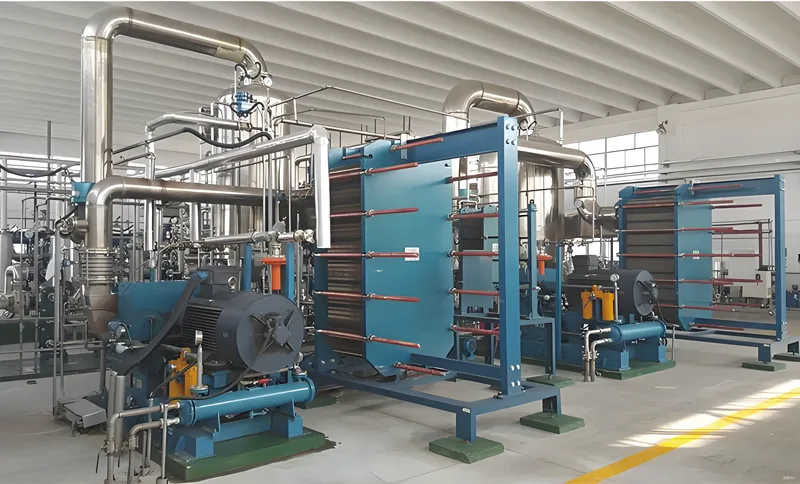
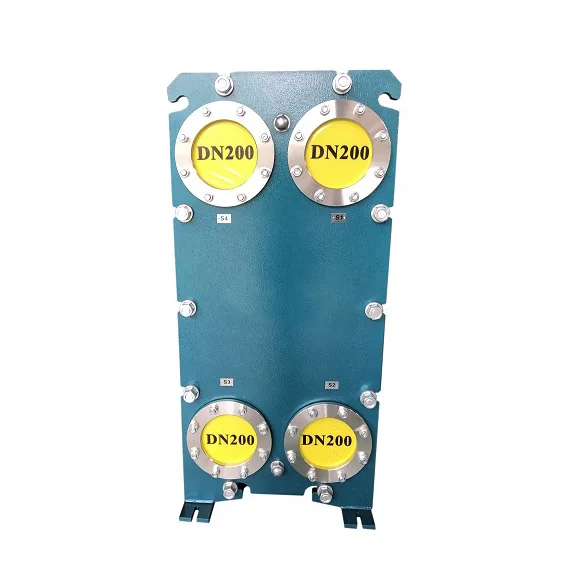
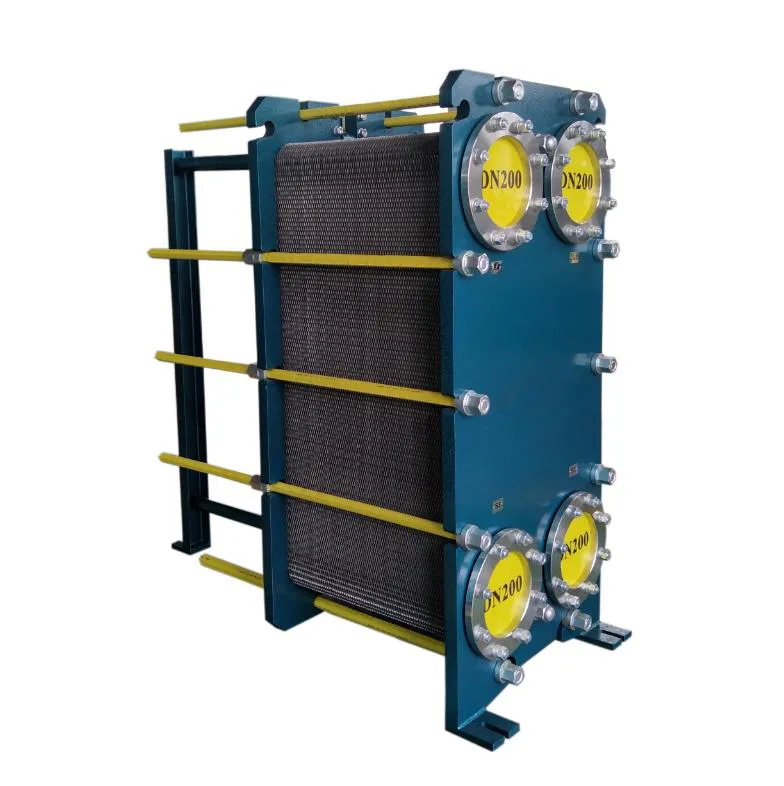
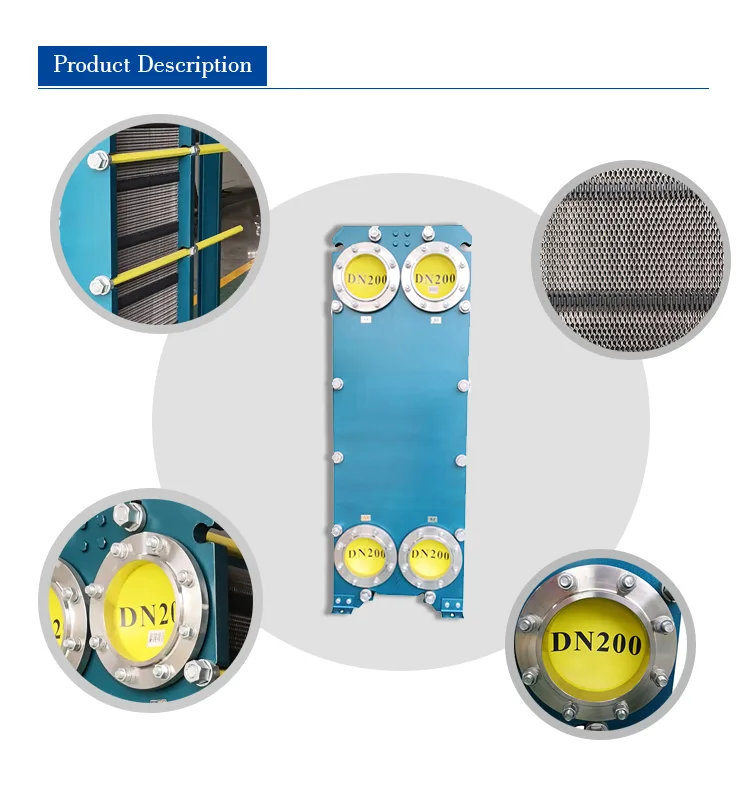
The wide channel plate heat exchanger adopts a unique coarse corrugated structure design. The outer contour of the plates is basically composed of horizontal corrugations, allowing the medium to flow unrestricedly over the heat exchange surface of the plates without clogging, and it has high heat transfer performance that traditional tube heat exchangers do not possess.

  • Product Description
  • Specification and model
  • Cases
  • FAQ
  • What is Wide channel plate heat exchanger working principle?

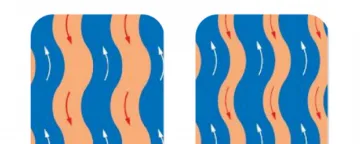
    The wide channel plate heat exchanger is a product specially developed for heat exchange conditions of various solid, crystal, fiber, slurry substances and high-viscosity media. Due to the special design of the heat exchange plates, it ensures smooth wide gap channels, smooth fluid flow, no retention, no dead zones and no channel blockage. The special feature of this type of plate lies in its unique corrugated shape where the width of the flow channels between the plates can reach 6-16mm.
    /uploadfile/202512/ab88b30d1a8ab32.png
  • What is plate heat exchanger

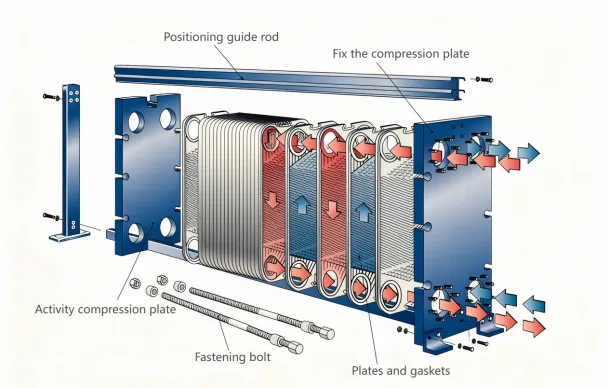
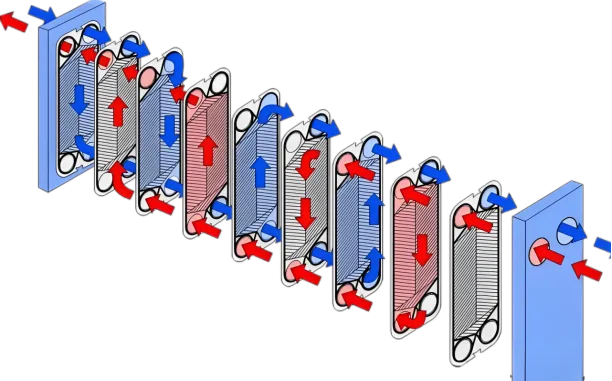
    The detachable plate heat exchanger is primarily constructed from stamped corrugated metal plates, gaskets, and a frame. These plates are arranged alternately to form a network of fluid channels, allowing hot and cold media to transfer heat through the plate walls in counter-flow or parallel-flow configurations.
    It achieves a heat transfer coefficient of 3000–4500 kcal/m²·°C·h, offers thermal efficiency 3 to 5 times higher than shell-and-tube heat exchangers, and requires up to 80% less floor space.
    To enhance corrosion resistance, materials such as stainless steel or titanium alloy are used. The plate pack can be quickly disassembled and reassembled using clamping bolts. Together with drainage channels and replaceable gaskets, this design enables easy cleaning and maintenance.
    The unit supports flexible configuration of flow arrangements and heat transfer area, making it suitable for applications involving high temperatures (≤200°C), medium pressure (≤1.6 MPa), and corrosive media.
    /uploadfile/202512/2eabfd3fe4cad88.png
  • Application scenarios of wide channel plate heat exchangers

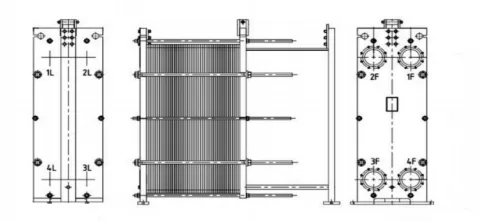
    Compared with the common plate heat exchanger, the plate spacing is larger and the cross-sectional area of the single flow channel is larger. Due to the large plate spacing, the cross-sectional area of a single flow channel of the plates is much larger than that of a general plate heat exchanger. This has a more obvious advantage for some liquids with high viscosity and working conditions with large medium flow rates. On the cold fluid side, a medium flow channel with contact points is formed between the plates for the circulating water to pass through, while on the hot fluid side, a medium channel without contact points is formed between the plate groups It ensures the smooth passage of liquid containing solid particles, thus resulting in small pressure loss and uniform fluid distribution.
    /uploadfile/202512/70cfa0e673efd.png
  • Heat exchange principle

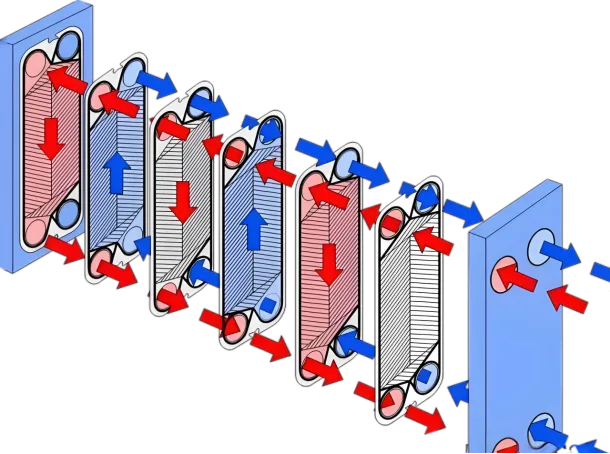
    Single-flow structure: Only two plates do not conduct heat - head and tail plates
    /uploadfile/202512/d24e0a9c78c3ae8.png
  • Double-process structure: Each process has three plates that do not conduct heat.
    /uploadfile/202512/fcd9c7db2858a07.png

Technical parameters


Model

Ripple depth(mm)

Equivalent diameter(mm)

Diameter of the corner hole(mm)

Single board area

(m²)

Thickness of the pressed plate

(mm)

BW100A

5.0

10

120

0.45

0.8~0.9

BW100B

5.5

11

120

0.52

0.8

BW200A

7.5

15

195

0.80

0.6~0.8

BW200B

12.0

24

194

0.88

1.0~1.2

BW200C

9.0

6~12

194

1.00

1.0

BW200D

11.2

22.4

196

1.23

0.8~0.9

BW250A

16.0

32

250

1.20

0.8~1.0

BW250B

16.0

32

250

1.50

0.8~1.0

BW300A

10.0

20

292

1.60

0.9~1.0

BW300B

11.0

22

292

1.45

1.0~1.2

BW350

7.5

15

348

1.87

0.8~0.9

BWO.8

8.0

5~11

195

0.80

0.7~0.8


FAQ

  • What is a Plate Heat Exchanger (PHE)?

    +

    A Plate Heat Exchanger is a type of high-efficiency heat exchanger composed of a stack of corrugated metal plates. Thin rectangular channels are formed between the plates, allowing heat exchange through the plates. It mainly consists of metal plates, sealing gaskets, a fixed pressure plate, a movable pressure plate, and tightening bolts.

  • What is the working principle of a PHE?

    +

    It operates based on heat conduction. Two fluids (hot and cold) flow in separate channels on opposite sides of the metal plates (usually in a counter-current flow). Heat is transferred through the plate wall. The corrugated structure of the plates induces strong turbulence, significantly enhancing heat transfer efficiency.

  • What are the main advantages of a PHE compared to a Shell & Tube heat exchanger?

    +

    High Heat Transfer Efficiency: The heat transfer coefficient is typically 3-5 times that of shell & tube exchangers.
    Compact Structure: Small footprint, occupying only 1/5 to 1/3 of the space required by shell & tube units.
    Flexibility: Heat transfer area can be adjusted by adding or removing plates.
    Easy to Clean: Easy to disassemble, making it suitable for applications requiring frequent cleaning.
    Low Heat Loss: Insulation is usually not required.

  • What are the common plate materials and how to choose them?

    +

    Stainless Steel (304/316L): Most common; suitable for water, oil, and common organic solvents.
    Titanium (Ti) / Ti-Pd Alloy: Suitable for seawater, brine, and liquids with high chloride content.
    Hastelloy: Suitable for strong corrosive media like concentrated sulfuric acid and hydrochloric acid.
    Nickel (Ni): Suitable for high-temperature, high-concentration caustic soda.

  • hat are the common materials for Sealing Gaskets?

    +

    Nitrile Rubber (NBR): Suitable for water, oil, and alkanes; temperature usually <120°C.
    EPDM: Suitable for water, steam, acids, and alkalis; resistant to aging but not oil; temperature usually <150°C.
    Fluoroelastomer (Viton/FKM): Resistant to high temperatures, acids, alkalis, and oils; suitable for complex conditions.

Hainan Yongtuo Win-Win International Technology Co., Ltd.

Request A Free Quote/24H Services/Professional solutions

Welcome to contact us at any time. We will provide you with project plans, quotation requirements and cost assessment

We'd love to hear from you.

Please leave a message, we will get in touch with you as soon as possible!

  • *We respect your privacy. When you submit your contact information, we agree to only contact you in accordance with our Privacy Policy.

Contact Us

Inquire