Home
Home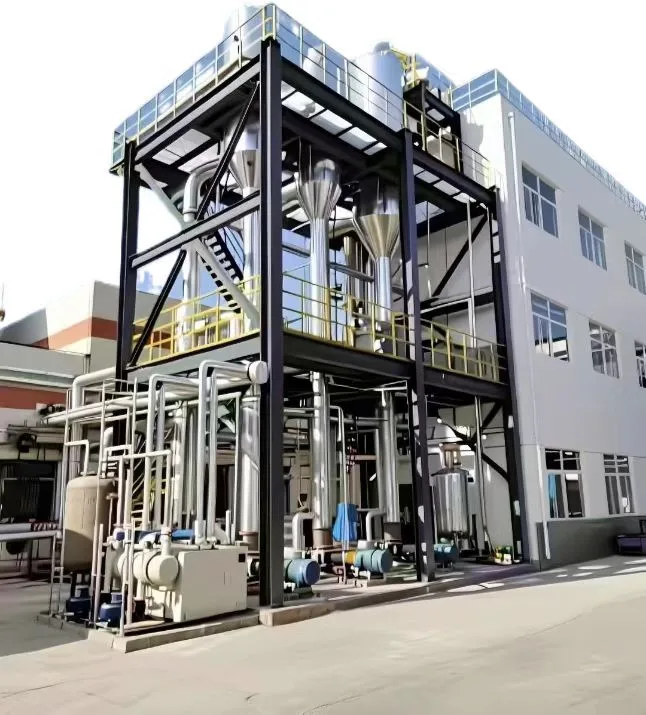
- Working principle
- Product Overview
- Other project cases
-
What is MVR Wastewater Treatment Technology?
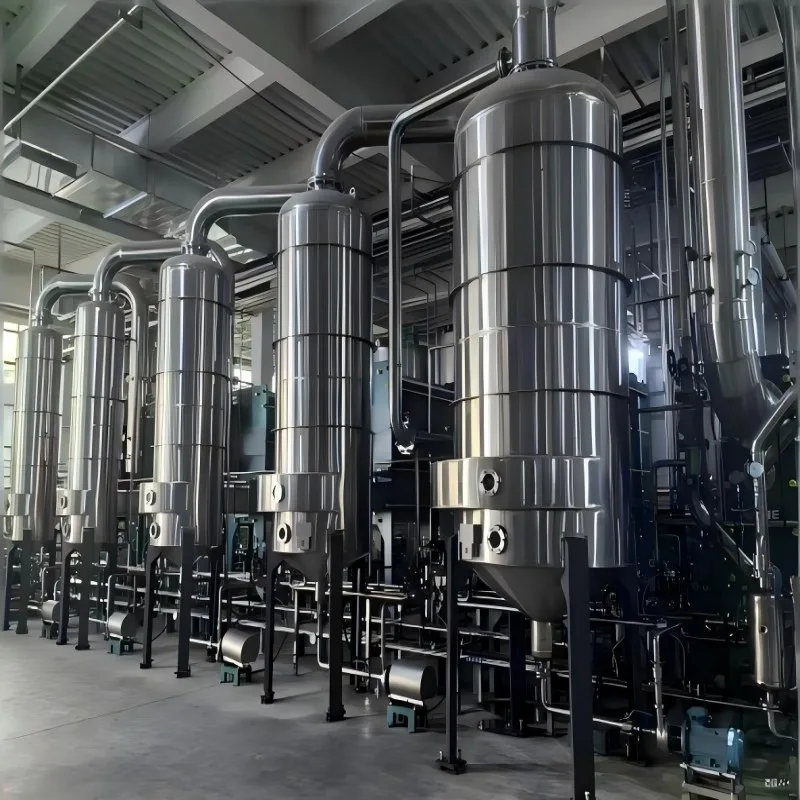
MVR is a high-efficiency evaporation and concentration technology that recovers the latent heat of secondary steam using a mechanical compressor.
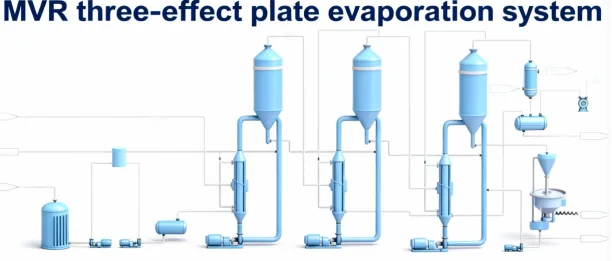
In wastewater treatment, an MVR system works through the following steps:
Wastewater enters the evaporator and is heated to generate water vapor.
The vapor is compressed by a compressor, increasing its temperature and pressure.
The compressed vapor returns to the evaporator as a heat source to further heat the wastewater.
Through continuous circulation, wastewater is concentrated and clean condensate water is recovered efficiently.
Compared with traditional single-effect or multi-effect evaporation, MVR significantly reduces energy consumption and is suitable for projects that are sensitive to energy prices and operating costs.
-
Applicable Industries and Wastewater Types
Our MVR wastewater treatment technology is suitable for various high-salinity, high-COD and difficult wastewater types:
1.Desalination Brine
Volume reduction and deep concentration of RO brine
Improve overall water recovery and reduce high-salinity discharge
2. Chemical & Fine Chemical Wastewater
Saline and organic-laden wastewater (e.g. solvents, dye intermediates)
Volume reduction and resource recovery from high-COD, high-TDS wastewater
3.Electroplating & Surface Treatment Wastewater
Concentration of heavy-metal-bearing and high-salinity wastewater
Facilitates subsequent solidification, landfill or resource recovery
4.Pharmaceutical & Biochemical Wastewater
Organic, high-ammonia and high-salinity wastewater
Can be combined with biological and oxidation processes to meet discharge or reuse standards
5.Food, Beverage & Drinking Water
Concentration of cleaning wastewater and byproduct mother liquor
Achieve water reuse and wastewater reduction
6.Energy, Mining & Oil & Gas
Mining wastewater, produced water and injection water
Suitable for high-hardness, high-sulfate, high-chloride waters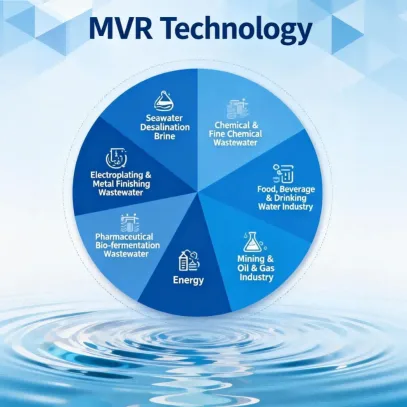
-
Key Technical Advantages
1.Low Energy Consumption & Competitive OPEX
Latent heat is efficiently recovered via mechanical recompression
Overall energy consumption can be reduced by about 40–60% compared with conventional evaporation (depending on water quality and design)
2.High Water Recovery & Easy ZLD Implementation
With crystallization, water recovery rates above 95% are achievable
Greatly reduces wastewater discharge and environmental risk
3. Compact Footprint & Modular Design
MVR systems are compact and require limited footprint
Skid-mounted modular design is available for projects with limited space or fast deployment needs
4. Suitable for High Salinity, High Hardness & Complex Water
Capable of treating wastewater with TDS up to several hundred thousand mg/L
Anti-scaling design and proper process staging reduce scaling and corrosion risk
5. High Automation & Easy Operation
PLC + HMI automatic control with real-time monitoring
Optional remote monitoring and data logging for easier O&M
6. Optimized Life-Cycle Cost (CAPEX + OPEX)
With proper design, total life-cycle cost is competitive
Suitable for industrial users with long-term operation planning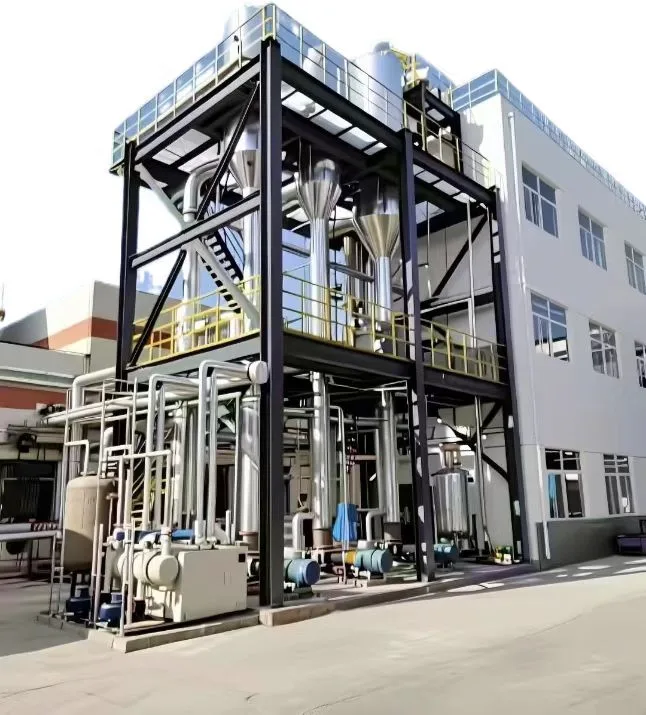
-
Engineering-Proven Design & Optimization
1.High-Efficiency Heat Exchangers
Falling-film or forced-circulation evaporators selected based on water quality
Optimized flow velocity and heat transfer area to extend cleaning intervals
2.Anti-Scaling & CIP
Softening, antiscalants and pH control minimize scaling tendency
Equipped with CIP for online chemical cleaning to reduce downtime
3.Waste Heat Recovery & Energy Saving
Use existing process waste heat to preheat feed water
Compressors can be frequency-controlled to adapt to varying loads
4.Multi-Stage MVR & Hybrid Processes
Large-scale or ultra-high salinity projects can use multi-stage MVR or MVR + crystallizer
Combination with RO/NF to form hybrid “Membrane + MVR” processes for lower overall energy consumption


Hainan Yongtuo Win-Win International Technology Co., Ltd.
Request A Free Quote/24H Services/Professional solutions
Welcome to contact us at any time. We will provide you with project plans, quotation requirements and cost assessment
-

-

-

-

Room 5091, Block A, Building 1, Phoenix Island, Sanya Central Business District, Tianya District, Sanya City, Hainan Province